Buzz, Ping, Spin: How Casino Notifications Are Quietly Overriding Your Best Intentions
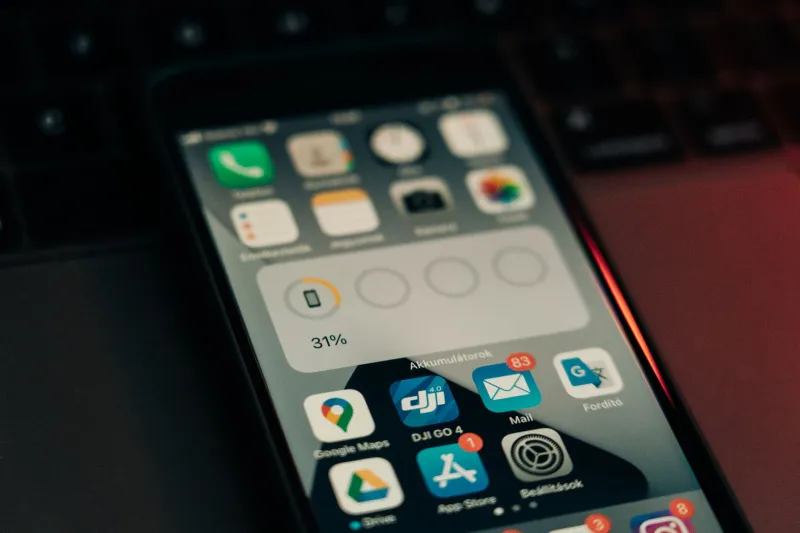
You've had a good session. You cashed out at the right time, closed the app, and felt genuinely good about it. Disciplined, even. Then, forty minutes later, your phone buzzes. 'Your exclusive bonus is waiting — claim before midnight!'
And just like that, the session you ended isn't quite over.
This is the notification economy in action — and in the world of instant mobile casino gaming, it's one of the most effective and least-discussed mechanisms for keeping Aussie players engaged well past the point they'd chosen to stop.
Built to Pull You Back
Push notifications aren't a passive feature. They're an active retention tool, engineered by teams whose entire job is to understand when you're most likely to re-engage and what message will be most effective at making that happen.
The timing isn't random. Platforms track your play history and use that data to identify your typical gaming windows — the lunch break scroll, the post-dinner session, the late-night wind-down. Notifications are often scheduled to arrive just before those windows, priming you to open the app right when you'd statistically be most likely to anyway.
The content is equally deliberate. 'You've got free spins waiting' creates a sense of something already earned but not yet claimed — loss aversion in notification form. 'A player just won $4,200 on Lightning Link' is social proof wrapped in urgency. 'Your bonus expires in 3 hours' is a countdown timer delivered directly to your pocket.
None of this is accidental. It's architecture.
Why Your Willpower Doesn't Stand a Chance
Here's the uncomfortable truth about willpower: it's a finite resource, and it depletes across the day. By the time most Aussies are hitting their evening gaming window — after work, after dinner, after sorting out the kids — their capacity for deliberate, effortful decision-making is already running low.
A notification arriving at 9pm doesn't encounter the same version of you that made a calm, considered decision at noon to limit your gaming to weekends. It encounters a tired, slightly bored version of you who's already unlocked their phone seventeen times in the last hour.
In that state, the friction between 'I wasn't going to play tonight' and 'well, I've already got the app open' becomes very thin. Especially when the notification has pre-loaded a bonus that makes the first few spins feel effectively free.
The 'You've Won' Message Problem
A specific category of notification deserves its own attention: the win alert. Many platforms send push messages when your account receives a credit — a bonus payout, a free spin result, a small jackpot. These messages are framed as good news, and technically they are.
But the psychological effect is to pull you back into a winning headspace at a moment when you're not playing. You weren't thinking about the casino. Now you are, and you're thinking about it through the lens of a win. Of course you open the app. Who wouldn't want to build on a good result?
What the notification doesn't mention is that the win was a $2.40 bonus credit on a wagering requirement that needs $60 of play to unlock. The framing does the work. The details come later — if at all.
The Aussie Mobile Context
Australia has one of the highest smartphone penetration rates in the world, and Aussies check their phones an average of over 80 times per day. That's 80 potential touchpoints at which a well-timed notification can redirect your attention.
For mobile casino platforms, that's an extraordinary opportunity. And because instant-play gaming is specifically designed for mobile — quick sessions, fast loads, one-tap deposits — the gap between receiving a notification and being mid-session is measured in seconds.
There's no commute to a casino. No parking. No waiting for a machine. The notification is essentially the front door, and it opens directly into the gaming floor.
Taking Back Control: Practical Steps That Actually Work
The good news is that notification systems can be managed, and doing so is one of the most effective things a mobile casino player can do to protect their own intentions. Here's what works:
Turn off push notifications entirely, then opt back in selectively. Most players accept notification permissions by default during app setup and never revisit that decision. Go into your phone settings right now and check what permissions your casino apps have. You might be surprised. Disabling notifications doesn't stop you from playing — it just means you choose when to play, rather than being prompted.
Use 'Do Not Disturb' scheduling. Both iOS and Android allow you to schedule DND windows that block all notifications during specific hours. Set it for your highest-risk periods — late evenings, early mornings, whatever your data tells you about when you're most likely to play impulsively.
Treat bonus expiry timers with scepticism. A bonus that expires at midnight is a marketing mechanic, not an emergency. If you wouldn't have played tonight without the notification, the expiry of a bonus you didn't know about yesterday is not a compelling reason to start now.
Create physical distance from your phone during cooling-off periods. If you've decided not to play tonight, leaving your phone in another room removes the notification trigger entirely. It sounds almost embarrassingly simple, but it works — because it removes the stimulus before your willpower has to engage with it.
Check your platform's communication preferences. Most reputable platforms allow you to manage what types of messages you receive — promotional emails, SMS alerts, push notifications — independently of each other. You can stay informed about genuine account activity without being marketed to constantly.
The Bigger Picture
Notifications aren't inherently predatory. Knowing that a withdrawal has processed, that a verification document has been accepted, or that a scheduled maintenance window is coming — that's useful information. The line gets crossed when the notification system is primarily a re-engagement tool dressed up as a service feature.
As a player, the most empowering thing you can do is separate those two functions. Keep the notifications that serve your needs. Switch off the ones that serve the platform's.
Instant casino gaming is genuinely fun when you're in control of when and why you show up. The goal of a good notification strategy — from your side, not theirs — is to make sure that decision stays yours.