Self-Checkout, No Lines, No Thinking: What the Supermarket Aisle Knows About Your Casino Spending
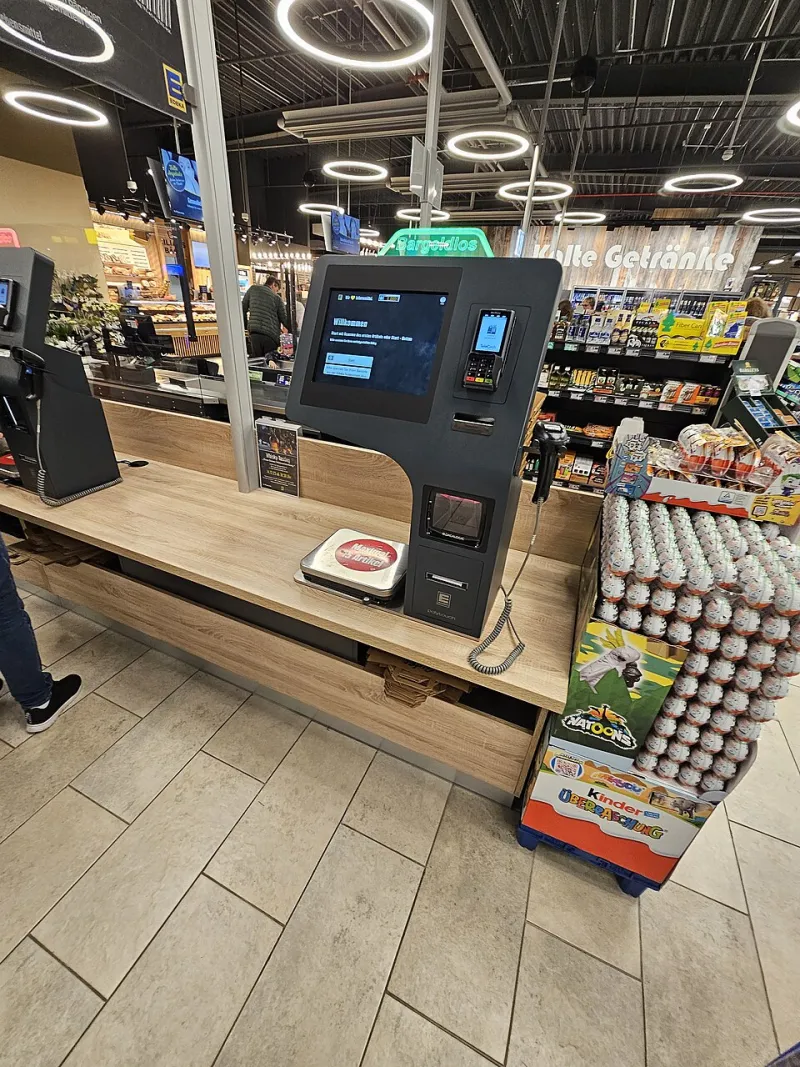
Photo: Triplec85, CC BY-SA 4.0, via Wikimedia Commons
Next time you're at Coles or Woolies, have a think about the journey you just took. You walked in for milk and bread. You walked out with a bag of chips, a magazine you didn't know existed, and something from the 'special' rack near the registers. That's not bad luck — that's design.
And here's the uncomfortable part: the same design principles are sitting inside your favourite instant casino lobby.
The Friction-Free Economy Works Both Ways
For years, supermarkets have been quietly removing every possible bump between you and your wallet. Self-checkouts mean no small talk, no queue, no moment to reconsider. Tap-and-go means you don't even count the money leaving your account. The impulse aisles — chocolates, batteries, those weird gift boxes — exist precisely because a decision made near the exit is a decision made with less scrutiny.
Online casinos have adopted the same playbook. No cashier, no waiting period, no point where a human asks, 'Are you sure about this?' A deposit takes seconds. A rebuy takes one tap. The entire experience is engineered so that the moment of hesitation — the natural circuit-breaker where a sensible person might stop — simply never arrives.
It's worth saying plainly: this isn't a scandal, it's just commerce. Businesses make spending easier because easier spending means more spending. But if you're the one holding the bankroll, it pays to understand the machinery.
Lesson One: The Trolley Rule
Behavioural economists have long noted that shoppers who stick to a list spend less than those who browse. The list works because it's made before you're standing in front of the thing you want.
Casino translation: decide your session budget before you open the lobby, when your head is clear and no flashy banner is whispering at you. Write it down if you have to. 'I'm playing with $40 tonight and that's the whole story.' Once you're in, the trolley rule applies — if it's not on the list, it doesn't go in.
Lesson Two: Build Your Own Checkout Line
Here's a thought experiment. Imagine every supermarket made you wait five minutes before paying. Sales of lollies at the register would collapse overnight, because friction gives your rational brain time to catch up with your impulsive one.
You can manufacture that friction yourself:
- Log out after every session. Making yourself re-enter a password is a mini speed bump.
- Delete saved payment details. Re-entering a card number is tedious — deliberately so.
- Use a separate account for gaming money, so a top-up means an actual bank transfer, not a tap.
None of these stop you from playing. They just make sure each deposit is a decision rather than a reflex.
Lesson Three: Beware the 'Specials' Tag
Every shopper knows the deal psychology: '2 for $5' when you only wanted one. Casinos run their own version — deposit bonuses, free spin bundles, 'value' packages that make a bigger deposit feel like smart shopping.
The trick is the same as the supermarket: a discount on something you weren't going to buy isn't a saving. A 100% match bonus on money you'd already decided not to spend isn't a bargain. Ask yourself the checkout question: would I buy this at full price, right now, without the promo?
The Bottom Aisle
We're not going to pretend the average Aussie is about to start writing shopping lists for their pokies sessions. But the parallel matters, because most people already know how to resist a supermarket nudge — they do it every week without thinking. The skills transfer. Budget first, browse second. Add friction where the design removed it. Treat every 'bonus' like a bulk deal you didn't ask for.
Fast games and quick access are brilliant when you're in control of them. The moment you're not, they're just a very efficient aisle with no checkout line in sight.